Fri Dec 12 2025
5 Simple Mindfulness Exercises for Holiday Anxiety
Five short mindfulness exercises for holiday stress, a plan for using them at family events, break-time scripts and signs anxiety needs more support.
Published by Lyte Psychiatry · Meet our care team
Written by the Lyte Psychiatry clinical team. Clinically reviewed by Ana G., LPC, and medically reviewed by Dr. Akinwande Akintola, MD, supervising physician. Last reviewed: November 4, 2026.
Mindfulness exercises for holiday anxiety work by bringing your attention back to the present moment, where you can notice your breath, body and surroundings instead of rehearsing what might go wrong. Simple practices such as slow breathing, grounding through the senses and a short body scan take only a few minutes and can be used at the table, in the car or in a quiet room.
This article is for adults and teens who feel tense, overwhelmed or on edge during the holiday season, especially around family gatherings, travel and busy schedules. It walks through five short exercises, a plan for using them, what to say when you need a break, and signs that anxiety needs more than self-help.
Why do the holidays make anxiety worse?
The holidays can make anxiety worse because they stack many stressors into a few weeks. Travel, money, crowded schedules, family tension, grief and disrupted sleep all arrive at once, often alongside high expectations that everything should feel joyful.
The American Psychiatric Association (APA) notes that unrealistic expectations add to holiday stress and that it is OK to say no and to remove yourself from situations when needed. Those two permissions make room for the exercises below.
For people who already live with an anxiety disorder, the season can intensify symptoms such as restlessness, racing thoughts and trouble sleeping.
Does mindfulness actually help anxiety?
Mindfulness can help some people with anxiety, though it is not a replacement for treatment when symptoms are significant. The National Center for Complementary and Integrative Health (NCCIH) reports that in a 2018 analysis, mindfulness approaches performed better than no treatment for anxiety and depression, while noting that some studies had unclear risk of bias.
In practical terms, mindfulness gives you a pause between a stressful trigger and your reaction. That pause can make it easier to choose a calmer response, such as stepping outside, taking a breath or changing the subject.
Results vary from person to person, and regular short practice tends to help more than a single long session on a hard day.
What are five simple mindfulness exercises to try?
Five simple mindfulness exercises for holiday anxiety are slow belly breathing, 5-4-3-2-1 grounding, a one-minute body scan, mindful noticing of one object and mindful movement. Each takes one to five minutes.
1. Slow belly breathing
Place a hand on your belly. Breathe in gently through your nose so your belly rises, then breathe out slowly through pursed lips, letting the exhale last a little longer than the inhale. Repeat for about a minute. MedlinePlus describes pursed-lip and belly (diaphragmatic) breathing as techniques that can help when someone is breathing too fast.
2. 5-4-3-2-1 grounding
Name five things you can see, four you can feel, three you can hear, two you can smell and one you can taste. This pulls attention out of worry and into your senses.
3. One-minute body scan
Move your attention slowly from your forehead to your feet. Wherever you notice tightness, such as clenched jaw or raised shoulders, let it soften on the out-breath.
4. Mindful noticing
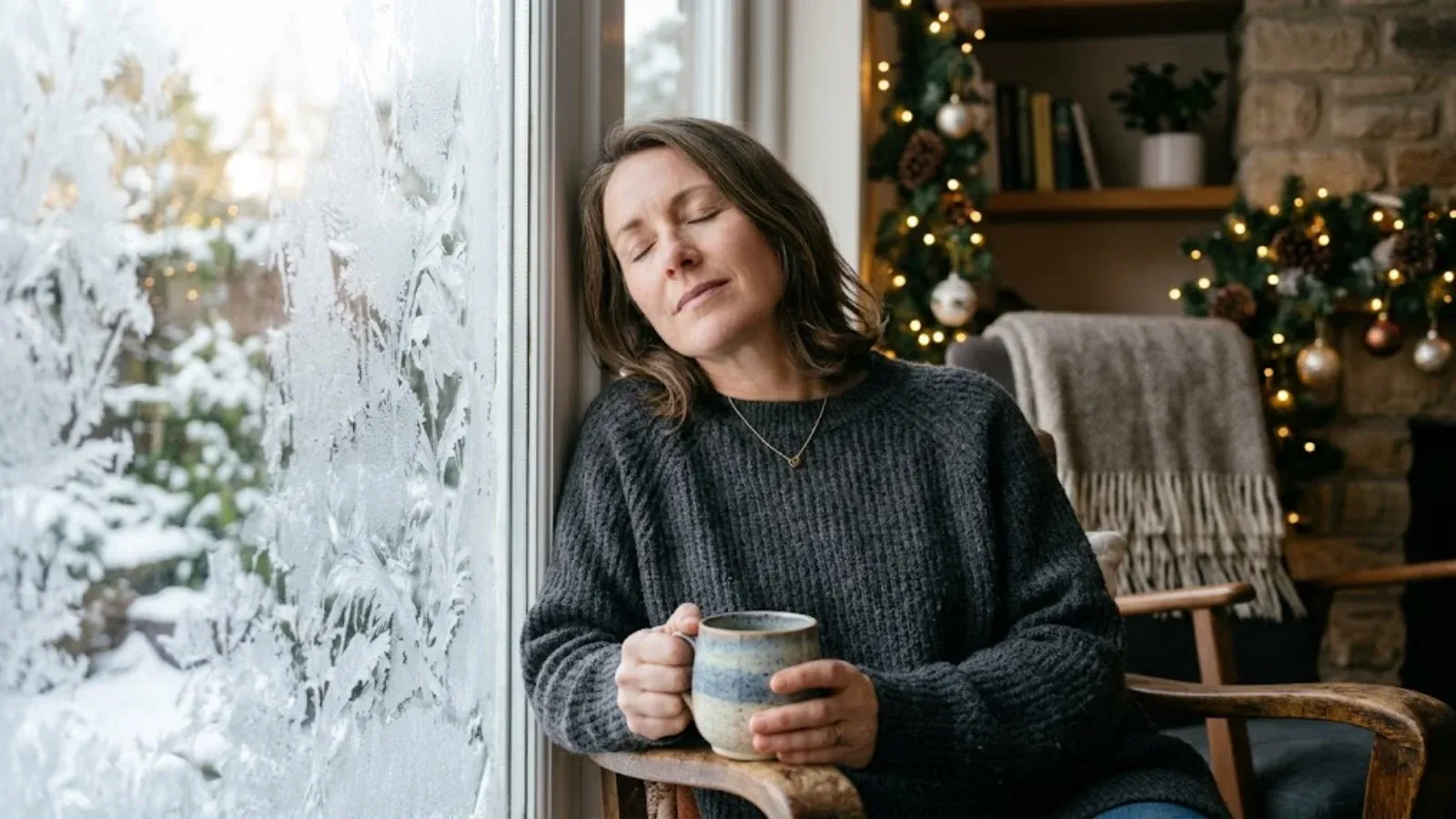
Choose one object, like a warm mug or a string of lights. For thirty seconds, notice its color, temperature, texture and smell. When your mind wanders, gently return.
5. Mindful movement
Take a slow walk around the block, roll your shoulders or stretch gently. Pay attention to each step or movement rather than to your to-do list.
Are there any risks to mindfulness or relaxation exercises?
Mindfulness and relaxation exercises are generally safe, but they are not right for everyone in every moment. The NCCIH notes that relaxation techniques are generally considered safe for healthy people, though occasionally people report increased anxiety during them.
If focusing on your breath makes you more anxious, switch to an outward-focused exercise such as grounding or mindful walking. People with a history of trauma sometimes prefer to keep their eyes open and stay aware of the room. The NCCIH also advises seeing a health care provider for severe or long-lasting symptoms rather than relying on relaxation techniques alone.
How can you use these exercises during a gathering, step by step?
You can use these exercises during a gathering by practicing beforehand and planning when you will use them. A short routine makes the skills easier to reach when stress is high. Here is an example:
- Practice daily for a week before. Two to five minutes is enough.
- Pick your go-to exercise. Choose the one that felt most natural.
- Use it on arrival. Do slow breathing in the car or on the doorstep.
- Plan a reset point. For example, a bathroom break or a walk after the meal.
- Notice early signs. Tight chest, clenched jaw or a rising voice are cues to pause.
- Ground, then rejoin. Do 5-4-3-2-1 grounding, then return when ready.
- Close the day kindly. Before bed, name one moment that went better than you feared.
Can mindfulness exercises for holiday anxiety help with grief?
Mindfulness exercises for holiday anxiety can also soften the waves of grief that often arrive during the season, though they will not take grief away. Mindfulness asks you to notice feelings without judging them, which can make room for sadness instead of fighting it.
The APA suggests that people who are grieving during the holidays share stories about the person they miss, and it encourages fresh air, sunlight and staying in therapy if you are already in care. A grounding exercise before a meaningful moment, such as lighting a candle or setting the table, can help you stay present for it.
If this is your first holiday after a death, our guide to your first Thanksgiving after a loss offers more support.
How do you build a short daily practice through the season?
You build a daily practice by attaching a two-minute exercise to something you already do every day. Linking a new habit to an existing one makes it easier to remember on busy days.
- Do slow breathing while your coffee brews.
- Do a body scan after you get into bed.
- Try mindful noticing while waiting in a checkout line.
- Take a mindful walk after one meal each day.
Keep expectations small. Some days you will forget, and that is fine; simply start again the next day. Practicing mindfulness exercises for holiday anxiety on calm days is what makes them available on stressful ones.
What can you say when you need a break?
You can say something short and neutral, because you do not owe anyone a long explanation. The APA says there is no shame in removing yourself from a situation during the holidays.
Checklist of phrases:
- "I am going to step outside for some fresh air. Back in a few minutes."
- "I am going to help with the dishes for a bit."
- "I would rather not talk about that today. How is your new job going?"
- "We are heading out at seven so we can get home at a decent hour."
- "I need a quiet minute. I will join you soon."
For more scripts around family visits, see our guide to Thanksgiving family anxiety.
When does holiday anxiety need more than mindfulness?
Holiday anxiety needs more than mindfulness when it lasts beyond the season, keeps you from usual activities or comes with panic or physical symptoms that frighten you. The National Institute of Mental Health (NIMH) explains that anxiety disorders involve worry or fear that does not go away and can interfere with work, school and relationships.
Red flags that call for help sooner:
- Anxiety most days for weeks, even outside holiday events
- Panic attacks or avoiding places because of fear
- Drinking more to get through gatherings
- Thoughts of suicide or self-harm
- Chest pain, shortness of breath or fainting
Chest pain or trouble breathing can have medical causes. The Centers for Disease Control and Prevention (CDC) advises calling 911 right away for possible heart attack symptoms such as chest pain or shortness of breath. Do not assume it is anxiety.
What should Texans know about holiday support?
Texans have access to 24/7 crisis support through 988 and through local mental health authorities. Texas Health and Human Services lists a crisis line for every county, which can help when holiday stress turns into an emergency and regular offices are closed.
Many Texans travel long distances by car for the holidays. If driving makes you anxious, plan rest stops and use grounding exercises while parked, not while driving. Lyte Psychiatry offers telehealth visits to patients who are physically located in Texas at the time of the visit, so you need to be in Texas during a telehealth appointment.
Getting support in Texas
Lyte Psychiatry offers therapy, psychiatric evaluation and medication management in Texas. In-person visits are available at Lyte Psychiatry's clinic in Pantego, in the Dallas–Fort Worth area.
Most new patients are seen within 1–2 business days. Weekend appointments are limited. Availability, insurance and clinician fit require confirmation. All Lyte Psychiatry services are available in Spanish.
Lyte Psychiatry is an outpatient practice. It does not provide inpatient care, crisis or after-hours coverage, medically supervised detox, or intensive outpatient or partial hospitalization programs. Learn more about anxiety care, read about calming anxiety at night and keeping your sleep on track during the holidays, or contact the practice.
If you are in a mental-health crisis in the United States, call or text 988. Call 911 for immediate danger.
Educational information, not a diagnosis or individual treatment plan.
Common Questions
Frequently Asked Questions
What is the quickest mindfulness exercise for anxiety?
Slow belly breathing and 5-4-3-2-1 grounding are two of the quickest. Breathing in gently and exhaling a little longer than you inhale can be done anywhere in about a minute. Grounding asks you to name things you see, feel, hear, smell and taste, which pulls attention away from worry and into the present.
Does mindfulness really help with anxiety?
It can help some people. The National Center for Complementary and Integrative Health reports that mindfulness approaches performed better than no treatment for anxiety and depression in a 2018 analysis, though some studies had limitations. Mindfulness works best as regular practice and is not a substitute for professional care when anxiety is significant or lasting.
Can mindfulness make anxiety worse?
Occasionally. Relaxation and breathing techniques are generally considered safe, but some people report feeling more anxious when they focus inward. If that happens, try an outward-focused exercise such as grounding through your senses or a slow walk, keep your eyes open, and talk with a clinician if it keeps happening.
How do I use mindfulness at a family gathering?
Practice for a few minutes a day beforehand so the skill is familiar. At the gathering, do slow breathing on arrival, plan a natural break such as a walk or helping with dishes, and use grounding when you notice early signs like a tight chest. Short, planned pauses are easier than waiting until you feel overwhelmed.
Is holiday anxiety normal?
Feeling some stress during the holidays is common, given travel, money, family dynamics, grief and packed schedules. It becomes a concern when anxiety lasts most days for weeks, causes panic or avoidance, leads to heavier drinking, or affects work and relationships. In those cases, talking with a health care provider is a good next step.
When should I see someone about holiday anxiety?
See a health care provider if anxiety continues after the holidays, interferes with daily life or includes panic attacks. Get urgent help for thoughts of suicide by calling or texting 988 in the United States. Call 911 for chest pain, trouble breathing or fainting, since these can have medical causes.
Further Reading
NIMH — Anxiety Disorders
Diagnostic criteria and treatment options
ADAA — Anxiety Statistics
40M Americans affected — prevalence and impact data
APA — Anxiety Overview
Clinical summary from the American Psychological Association
These topic resources supplement the references linked within the article.
Your next steps for anxiety care
Choose the question that fits where you are now. Self-help tools support reflection and preparation; they do not diagnose a condition or replace care.
Who could I meet?
- Toyin Awe, PMHNP-BCPsychiatric Mental Health Nurse Practitioner
- NaTascha Jones, LPCLicensed Professional Counselor
The clinic confirms clinician fit, availability and insurance participation before scheduling.
Meet all Lyte clinicians · Understand provider roles
What will it cost, and how do I book?
Check insurance and benefits · View self-pay prices
Request an appointmentLyte Psychiatry — Texas
Anxiety Treatment — Texas
Evidence-based care for generalized anxiety, social anxiety, panic disorder, and phobias.
Find Care Near You
Lyte Psychiatry serves patients across Texas — in-person in DFW and via telehealth statewide.
Don't see your city? View all Texas locations →
Questions about cost? View insurance and payment information