Fri Oct 30 2026
Shift Work, Sleep and Mood: Surviving the Holiday Peak Season
Holiday overtime and the clocks falling back can strain sleep and mood. A sourced sleep plan, manager script and red flags for shift workers.
Published by Lyte Psychiatry · Meet our care team
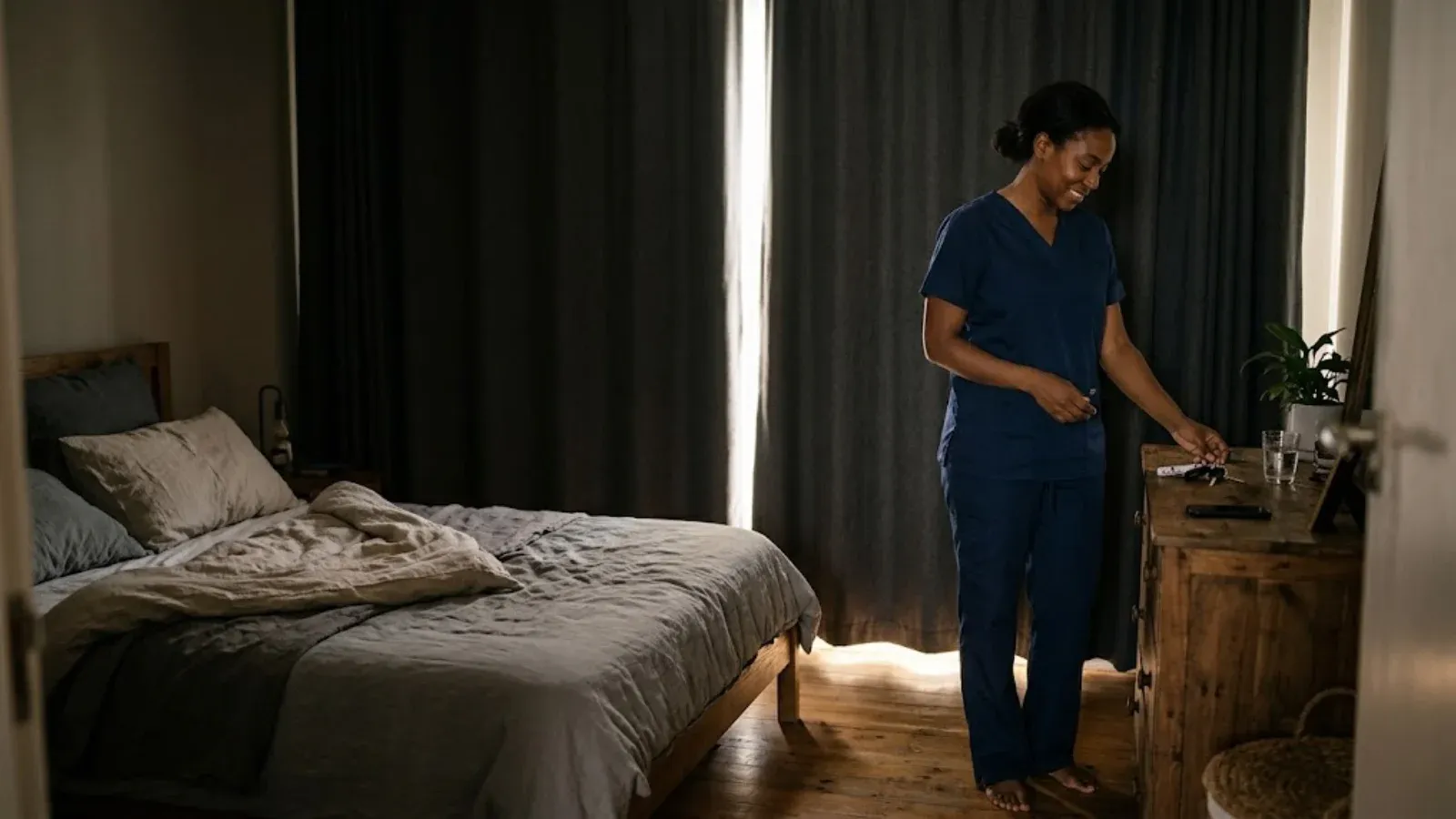
Shift work and mood are tightly linked. Night, rotating and very long shifts cut into sleep and push your body clock out of step with daylight, and short, broken sleep can leave you irritable, flat or anxious. From Thanksgiving through New Year's, overtime, short staffing and the clocks falling back tend to arrive together, which is why so many people feel worse in the same few weeks.
This guide is for people working nights, rotating shifts or extra hours during the holiday season: nurses and other health care staff, retail and warehouse workers, drivers, first responders, and the people who live with them. It covers how to tell normal tiredness from night shift depression or shift work sleep disorder, a sleep plan you can actually follow, how to handle working the holiday itself, and when to get help.
Key takeaways
- Shift work affects mood mostly through lost and mistimed sleep. Fixing the sleep usually helps the mood, but not always.
- Low mood that lasts two weeks or more, or stays after you have caught up on sleep, is worth checking with a clinician.
- Protect one main sleep window, keep your bedroom dark and quiet, and stop caffeine well before the end of your shift.
- If you are fighting to stay awake, do not drive home. Coffee does not reliably prevent micro sleeps.
- If you live with bipolar disorder, talk with your clinician before taking on night or rotating shifts.
How does shift work affect mood?
The link between shift work and mood runs mainly through sleep: shifts take sleep away and move it to the wrong time of day. Your body clock expects you to be awake in daylight and asleep at night. When work flips that, sleep tends to be shorter and lighter, even when you spend enough hours in bed.
The National Heart, Lung, and Blood Institute (NHLBI) lists shift workers among the people whose schedules conflict with their internal body clocks, and its page on how sleep affects your health says sleep deficiency has been linked to depression, suicide and risk-taking behavior, and can make it harder to manage your emotions.
The National Institute for Occupational Safety and Health (NIOSH), part of the CDC, makes a similar point in its training page on shiftwork, long work hours and fatigue. It describes stress, fatigue and negative mood as possible results of these schedules, and lists irritability, anxiety and depression among the effects of fatigue.
Sleep is only part of it. Nights and long runs of shifts also crowd out the things that quietly hold mood up: regular meals, daylight, exercise, and time with people who are awake when you are. Many people notice the loneliness before they notice the tiredness. Your days off go to recovery sleep, your friends stop asking, and a few weeks later you realize you have not had a real conversation outside work in a while.
Why the stretch from Thanksgiving to New Year's hits so hard
The holiday season stacks several sleep problems on top of each other. Hours go up, schedules change at short notice, and daylight shifts after the clocks fall back in early November. At the same time, there are more things to show up for at home.
The pressure looks a little different depending on the job.
Retail, warehouse and delivery work
Stores open earlier and close later around Black Friday and in the weeks before Christmas, and warehouses add overnight shifts to keep up with orders. Seasonal schedules are often posted late and change often, so it is hard to keep one sleep window. Physical work on little sleep also makes the body ache more, which can feed a low, worn-down mood.
Hospitals, care homes and emergency services
Health care and emergency services cannot close for the holidays, and coverage often gets thinner when staff take time off. That can mean extra shifts, back-to-back nights, or a holiday shift you did not choose. We cover nurses and health care staff in more detail below.
Missing the holiday itself
Working on Thanksgiving, Christmas Eve or New Year's Eve can hurt in a way that is not about sleep at all. Watching family photos come in while you are at work, or sleeping through the meal after a night shift, can leave people feeling left out or guilty. That is a normal reaction, and it helps to plan for it rather than just push through. There is a section on this further down.
Night shift depression: is it the schedule or something more?
"Night shift depression" is not a formal diagnosis, but people use it to describe low mood that seems to come with working nights. Sometimes the cause really is the schedule and too little sleep. Sometimes depression is developing alongside it, and more sleep alone will not fix it.
A simple way to tell the difference is to look at what happens when you rest. If two or three good nights of sleep on your days off bring you most of the way back, sleep loss is probably doing most of the damage. If the heaviness stays, or you have lost interest in things you usually enjoy, take that seriously.
The National Institute of Mental Health (NIMH) depression guide describes depression symptoms as being present most of the day, nearly every day, for at least two weeks. Those symptoms can include sadness or emptiness, loss of interest, changes in sleep or appetite, low energy, trouble concentrating, and feeling hopeless or worthless.
Shift work can make depression harder to spot, because tiredness, poor concentration and sleep changes are already part of the job. If you are unsure, write down how you feel on work days and days off for two weeks and bring it to a clinician. That record is often more useful than trying to remember.
Is it shift work sleep disorder or just being tired?
Being tired after a hard run of shifts is common. Shift work disorder, which many people search for as "shift work sleep disorder," is a longer-lasting problem with sleep or alertness because your work hours overlap the time you would normally sleep.
The American Academy of Sleep Medicine (AASM) lists these symptoms on its Sleep Education page on shift work disorder:
- Excessive sleepiness
- Difficulty falling asleep or staying asleep
- Lack of energy and difficulty concentrating
- Headaches
- Poor mood and irritability
The same AASM page includes self-check questions, such as whether a work-related sleep problem has lasted at least a month and whether it is hurting your social, family or work life. Not everyone who works shifts develops the disorder, and the symptoms overlap with other sleep, medical and mental health conditions. A clinician can help sort out which is which.
If you are a nurse or work in health care
Nurses and other health care workers carry a particular version of this problem. NIOSH reports on its shiftwork and fatigue page that night shift nurses report inadequate sleep 60% more often than day shift nurses, and that fatigued health care workers are at risk of care errors and vehicle crashes on the commute.
The workload adds to it. A related NIOSH page on psychosocial hazards in health care cites a 2019 American Nurses Association survey of more than 20,000 nurses in which 53% said they needed to work through breaks to get their work done, and 79% named stress as their top workplace hazard.
Then there is the emotional weight of the work itself. A difficult death, an aggressive patient or a frightening code near the end of a night shift can follow you home, and it is hard to fall asleep at 9 a.m. with your mind still on the unit. A few things nurses often find helpful:
- A short "closing" routine before you leave, such as a few slow breaths in the car or a two-line note of what happened, so the shift has an end.
- Talking through a hard shift with a coworker who understands, rather than replaying it alone.
- Not checking work messages after you get home, if your role allows it.
- Using your employer's employee assistance program, if it has one. Many health systems offer one, but the details vary.
If you work in health care and find yourself dreading every shift, feeling numb with patients, or snapping at people you love, that is not a personal failure. It is a sign the load is too high, and it is worth talking to someone about. Lyte Psychiatry's article on depression or burnout can help you put a name to what you are feeling.
A sleep plan for night or rotating shifts
The core of a sleep plan is one protected main sleep window, with light, caffeine and noise controlled around it. The steps below draw on the AASM shift work guidance. Treat them as a starting point and adjust them to your job and your household.
- Before the busy season starts: choose a main sleep window for work days and keep part of it on days off. If your schedule is about to change, move your sleep time gradually over several days instead of all at once.
- Set up the bedroom: make it dark, quiet and cool. Blackout curtains or an eye mask, earplugs, and a fan or white-noise machine all help.
- Tell your household: share your sleep hours and ask for quiet. A sign on the bedroom door sounds silly, but it works.
- During the shift: use caffeine early in the shift if you use it, and stop well before the end so it does not keep you awake later. If your breaks allow it, the AASM says a 20 to 30 minute nap can improve alertness.
- On the way home: the AASM suggests sunglasses if you have to be out in morning light, as long as you can still see well enough to travel safely.
- After the shift: go to bed fairly soon after you get home rather than staying up for hours, and keep your phone out of the bed.
- On days off: keep some of your usual sleep window, get daylight while you are awake, and plan time with people during the hours you feel most alert.
How much sleep are you aiming for? The NHLBI page on how much sleep is enough says adults need 7 to 8 hours a day, and NIOSH recommends 7 or more hours for adults. For many night workers, one main sleep plus a short nap is the most realistic way to get there.
Example: a day after a night shift
This is a hypothetical schedule for someone working 7 p.m. to 7 a.m. Your times will differ.
- 7:30 a.m. Leave work with sunglasses on. If you feel drowsy, get a ride or nap before driving.
- 8:15 a.m. Light snack, no caffeine, quick shower.
- 8:45 a.m. to 3:30 p.m. Main sleep in a dark, cool room, phone on silent.
- 3:30 to 6 p.m. Get outside if you can, eat a proper meal, and spend some time with family or friends.
- 6:15 p.m. Leave for work. A short nap around 5 p.m. can help before a long night.
Switching back on your days off
The hardest part of a run of nights is often the first day off. If you sleep all day and then lie awake all night, you can feel jet-lagged for most of your break. A middle path works better for many people: a shorter sleep after your last shift, up by early afternoon, outside in daylight, and a normal bedtime that night, even if it is a little early.
You will probably feel off for a day or two. That is normal. What helps most is being consistent, not perfect. If you find you can never get back to sleeping at night, or your mood drops every time you switch, note it in your diary and mention it at your next appointment. Patterns like that are useful for a clinician to see when thinking about shift work and mood together.
If you want to bring details to an appointment, a sleep diary makes it easier to see the links between your shifts, sleep and mood.
Working Thanksgiving or Christmas without wrecking your sleep
You can keep part of the holiday without giving up the sleep you need for your next shift. The trick is to move the celebration, not your sleep.
- Move the meal. If you work the night before, a late-afternoon dinner after you wake up is often easier than a lunch you would have to stay awake for.
- Do breakfast instead. If you come off a night shift on the holiday morning, a short breakfast with family before you sleep can feel like being there.
- Skip the all-nighter. Staying up all day to join everything and then going straight back to work is the fastest way to a bad night and a worse mood.
- Schedule the call. If you are at work during the gathering, set a time for a five-minute video call on your break.
- Pick one tradition. You do not have to do everything. Choose the one that matters most to you this year.
Feeling sad or resentful about working the holiday is normal. If those feelings keep growing into January, or you start dreading every holiday season, it may help to talk to someone. Lyte Psychiatry's guide to Sunday night anxiety before the work week has ideas that also work for the dread before a run of shifts.
What about melatonin for night shift sleep?
This article is general information, not a medical recommendation. Do not start, stop or change any medication or supplement without talking to your prescriber or another clinician.
Melatonin is one of the most common things people try for daytime sleep, but the evidence for shift workers is weak. The National Center for Complementary and Integrative Health (NCCIH) says in its melatonin fact sheet that studies of melatonin for shift workers have generally been small or inconclusive.
NCCIH also notes that in the United States, melatonin is sold as a dietary supplement and is regulated less strictly by the Food and Drug Administration (FDA) than medicines are, and that studies have found many products do not contain what their labels say. Short-term side effects reported in adults include headache, dizziness, nausea and sleepiness. NCCIH says people taking other medicines should talk with a health care provider first, and that people with epilepsy or those taking blood thinners need medical supervision.
If you are thinking about melatonin or any sleep medicine, bring your shift schedule to the conversation. Timing matters for shift workers, and your clinician can help you decide whether it makes sense for you at all. For a non-medication option, see Lyte Psychiatry's article on CBT-I for insomnia.
How should I handle the clocks falling back on shift schedules?
Treat the fall time change like any other schedule change: plan a few days ahead and protect your light timing. The AASM Sleep Education page on daylight saving time calls light and darkness the most powerful timing cues for alertness and sleepiness. It suggests moving your bedtime 15 to 20 minutes later each night for a few nights before the fall change, unless you are already short on sleep, and keeping light low until your target wake time.
For night workers, the change often shows up on the drive home, when the morning is suddenly brighter. Sunglasses help. If you are working overnight on the night the clocks change, ask ahead how your employer handles the extra hour, because practices differ.
For more on the adjustment itself, see Lyte Psychiatry's guide to resetting your body clock after falling back.
Is it safe to drive home after a night shift?
It is not safe to drive if you are struggling to stay awake. The Centers for Disease Control and Prevention (CDC) notes in a report on drowsy driving that shift workers, people with more than one job and people with irregular schedules are among the groups at higher risk.
The National Highway Traffic Safety Administration (NHTSA) drowsy driving page says the riskiest times are midnight to 6 a.m. and late afternoon, which overlaps many shift commutes. It also says coffee or energy drinks alone are not always enough, because they do not stop micro sleeps, and it names drifting over lane lines or hitting a rumble strip as signs to stop.
Plan the ride home the same way you plan your sleep. The AASM recommends arranging a ride when drowsiness is a problem. Other options are a carpool, public transit, or a short nap somewhere safe before you leave. If panic or anxiety, rather than sleepiness, makes driving hard, Lyte Psychiatry's article on panic attacks while driving may help.
What to say to your manager about your schedule
Keep it short, specific and focused on safety and steady work. You do not have to share a diagnosis to ask about your schedule. Employment rules and scheduling policies vary by employer and by state, so check your workplace policy or ask HR what applies to you. This article is not legal advice.
The AASM suggests that shift workers ask for a clockwise rotation, where each new shift starts later than the last, because most people find it easier to stay up later than to go to bed earlier.
Example script: "I'm happy to help cover the holidays. I sleep and work best when my shifts move later rather than earlier, and when I get at least one full day off after a run of nights. Could we build that into the next schedule?"
Before that conversation, it helps to know:
- Which shifts and rotations work best for your sleep
- How many nights in a row you can work safely
- Whether you need a ride plan for late finishes
- Whether your employer offers an employee assistance program
- The one change you most want
What to say at home
The people you live with often want to help but do not know how. A clear, kind request works better than hoping they will notice.
- "I'm working nights through New Year's. Can we keep the house quiet from 9 to 3 on my work days?"
- "If I seem short with you after a shift, it's the tiredness talking. Give me an hour after I wake up before we talk about anything big."
- "I can't do the whole day on Thanksgiving, but I'd love to do dinner. Can we eat at 5?"
- For kids: "When this sign is on the door, I'm sleeping so I can be safe at work. Knock only if it's an emergency."
If you have young children at home, daytime sleep may mean trading shifts with a partner, a relative, or a sitter for part of the day. That is worth setting up before the busy season, not in the middle of it.
When are mood changes during shift work a red flag?
Mood changes are a red flag when they last for weeks, stay after you have caught up on sleep, or start to affect safety, work or relationships. Talk with a clinician if you notice:
- Low mood, emptiness or loss of interest most of the day, nearly every day, for at least two weeks
- Anxiety or racing thoughts that keep you awake even when you have time to sleep
- Using alcohol or other substances to fall asleep or to stay awake
- Nodding off at the wheel or nearly falling asleep on the job
- Feeling hopeless, or having thoughts of death or suicide
If you live with bipolar disorder, talk with your clinician before agreeing to overnight work, overtime or rotating shifts. The NIMH bipolar disorder guide lists a decreased need for sleep as a sign of mania and suggests keeping a routine for eating, sleeping and exercising. A sudden burst of energy on very little sleep is worth a call to your care team that week, not a wait-and-see. Lyte Psychiatry's guide to bipolar disorder over the holidays covers this season in more detail.
If you already have depression or anxiety, share your work schedule with your care team. Lyte Psychiatry's article on how poor sleep can worsen mood disorders explains why sleep belongs in your treatment plan.
If you have thoughts of suicide or are in emotional distress, the 988 Suicide and Crisis Lifeline is free, confidential and available 24/7 by call, text or chat. Call 911 for immediate danger.
What should Texas shift workers keep in mind?
Many Texans work shifts in hospitals, distribution centers, airports, refineries and stores, and a lot of those jobs get busiest in the same holiday weeks. Around Dallas–Fort Worth, long commutes on highways like I-30, I-20 and I-35W after a late shift make the drowsy-driving plan above especially important.
Daytime heat is less of an issue in November and December, but Texas homes can still warm up in the afternoon sun. A fan, blackout curtains and a cooler room help day sleepers year-round.
Lyte Psychiatry offers telehealth visits to patients who are physically located in Texas at the time of the visit, which can make it easier to fit an appointment around shift hours. All Lyte Psychiatry services are available in Spanish.
Getting support in Texas
Lyte Psychiatry offers therapy, psychiatric evaluation and medication management in Texas. If sleep problems and low mood have outlasted a busy stretch at work, an evaluation can help you understand what is going on and what to try next.
In-person visits are available at Lyte Psychiatry's clinic in Pantego, in the Dallas–Fort Worth area. Most new patients are seen within 1–2 business days. Weekend appointments are limited. Availability, insurance and clinician fit require confirmation.
Lyte Psychiatry is an outpatient practice. It does not provide inpatient care, crisis or after-hours coverage, medically supervised detox, or intensive outpatient or partial hospitalization programs. If shift work and mood problems feel urgent, use the crisis options below rather than waiting for an appointment.
If you are in a mental-health crisis in the United States, call or text 988. Call 911 for immediate danger.
Educational information, not a diagnosis or individual treatment plan.
Common Questions
Frequently Asked Questions
Can shift work cause depression?
Shift work does not cause depression in everyone, but it can raise the strain on mood by cutting and mistiming sleep, reducing daylight and limiting time with others. NIOSH links shiftwork and long hours to stress, fatigue and negative mood. If low mood or loss of interest lasts two weeks or more, talk with a clinician rather than waiting for the schedule to change.
What is shift work sleep disorder?
Shift work sleep disorder, which sleep specialists call shift work disorder, is ongoing trouble sleeping or staying alert because your work hours overlap your normal sleep time. The American Academy of Sleep Medicine lists excessive sleepiness, trouble falling or staying asleep, low energy, headaches, and poor mood or irritability among its symptoms. A clinician can confirm it and rule out other causes.
Why do I feel irritable after night shifts?
Irritability after night shifts is often a sign of short or poor-quality sleep. The American Academy of Sleep Medicine lists poor mood and irritability among the symptoms of shift work disorder. A protected sleep window, a dark and quiet bedroom, and stopping caffeine late in the shift may help. Persistent irritability that does not improve with rest deserves a check-in.
Why do nurses struggle with night shift depression?
Night shift nurses lose more sleep and carry heavy emotional and physical workloads. NIOSH reports that night shift nurses report inadequate sleep 60% more often than day shift nurses, and that fatigue is linked to irritability, anxiety and depression. Hard shifts, skipped breaks and missed family time add to it. Ongoing low mood deserves a check-in with a clinician.
How do I sleep during the day after a night shift?
Go to bed soon after you get home, keep the bedroom dark, quiet and cool, and ask your household to protect your sleep hours. The AASM suggests sunglasses if you must be outside in morning light and stopping caffeine in the later part of the shift. If daytime sleep stays poor for a month or more, talk with a clinician.
How many hours of sleep do night shift workers need?
Night shift workers need about the same amount of sleep as anyone else. The National Heart, Lung, and Blood Institute says adults need 7 to 8 hours a day, and NIOSH recommends 7 or more. Many night workers get there with one main sleep after the shift plus a short nap before the next one.
Should I nap before a night shift?
A short nap before a night shift can help many people stay alert, especially before the first night in a run. The American Academy of Sleep Medicine says a 20 to 30 minute nap can improve alertness. Leave enough time to wake up fully before you drive, and keep naps short if long ones leave you groggy.
How do I sleep during the day with kids at home?
Plan childcare around your sleep before the busy season starts, whether that means trading time with a partner, a relative or a sitter. Use blackout curtains, earplugs and a fan, and give kids a simple rule, such as knocking only for emergencies when a sign is on the door. Even one protected four-hour block plus a nap helps.
How can I protect my mood during holiday overtime?
During holiday overtime, protect one steady sleep window, limit how many long shifts you stack in a row where you have a choice, and keep at least one small daily habit that supports mood, such as daylight or a call with a friend. Watch for low mood, hopelessness or drowsy driving, and get help early if they appear.
How do I handle working on Thanksgiving or Christmas?
Move the celebration rather than your sleep. If you work nights, a late-afternoon meal after you wake up or a short breakfast before bed is often easier than staying up all day. Schedule a quick video call on your break and pick one tradition that matters most. Feeling sad about missing the day is normal.
Does the clock change affect night shift workers?
Yes, the clocks falling back can affect night shift workers because light on the commute shifts and an overnight shift that spans the change can run an extra hour by the clock. The AASM suggests shifting bedtime gradually before the fall change and minimizing morning light until your target wake time. Ask your employer ahead how it handles overnight shifts.
Is melatonin safe for night shift workers?
Melatonin is not a proven fix for shift work. NCCIH says studies in shift workers have generally been small or inconclusive, and that supplement labels are often inaccurate. Short-term side effects can include headache, dizziness, nausea and sleepiness. Talk with your clinician before trying it, especially if you take other medicines, blood thinners, or have epilepsy.
Can coffee keep me awake on the drive home after a night shift?
Not reliably. The National Highway Traffic Safety Administration says coffee or energy drinks alone are not always enough, because they do not stop micro sleeps. If you are drowsy, get a ride, use transit, or take a short nap somewhere safe before driving. Drifting over lane lines or hitting a rumble strip means stop now.
Should someone with bipolar disorder work night shifts?
People with bipolar disorder should discuss night, rotating or overtime shifts with their clinician before agreeing to them, because sleep changes can affect mood stability. NIMH lists decreased need for sleep as a sign of mania and recommends a routine for eating, sleeping and exercising. A clinician can help weigh the schedule and plan warning signs to watch.
When should a shift worker see a doctor about sleep?
See a clinician if sleep trouble or sleepiness from your schedule lasts at least a month, hurts your work or relationships, or makes driving unsafe. Also seek care for low mood, anxiety or substance use to cope. A two-week sleep diary helps. In a crisis in the United States, call or text 988, and call 911 for immediate danger.
Can Lyte Psychiatry see shift workers in Texas?
Lyte Psychiatry offers telehealth visits to patients who are physically located in Texas at the time of the visit, and in-person visits at its clinic in Pantego. Most new patients are seen within 1–2 business days, and weekend appointments are limited. Availability, insurance and clinician fit require confirmation. All services are available in Spanish.
Further Reading
NIMH — Depression Overview
Prevalence, symptoms, and evidence-based treatments
CDC — Mental Health Data & Statistics
National survey data on depressive disorders
APA — Depression Fact Sheet
Clinical guidance from the American Psychological Association
These topic resources supplement the references linked within the article.
Your next steps for depression care
Choose the question that fits where you are now. Self-help tools support reflection and preparation; they do not diagnose a condition or replace care.
Who could I meet?
- Dr. Akinwande Akintola, MDSupervisory Psychiatrist & Medical Director
- Prishina Jimenez, LPCLicensed Professional Counselor
The clinic confirms clinician fit, availability and insurance participation before scheduling.
Meet all Lyte clinicians · Understand provider roles
What will it cost, and how do I book?
Check insurance and benefits · View self-pay prices
Request an appointmentLyte Psychiatry — Texas
Depression Treatment in Texas
Medication management and therapy for major depression, persistent depressive disorder, and seasonal depression.
Find Care Near You
Lyte Psychiatry serves patients across Texas — in-person in DFW and via telehealth statewide.
Don't see your city? View all Texas locations →
Questions about cost? View insurance and payment information